What happens when a café swaps its grey table QR codes for a code made from its own latte art? In short, people notice the code, they trust it more, and the café finally learns which tables and hours actually use it. Here is how that plays out, step by step, in one illustrative example.
The problem: table QR codes nobody looks at twice
Picture a neighborhood café in Portland, Maine. Call the owner Claire. Like most cafés, she put a QR code on every table a few years ago. It opens a PDF of the menu.
The codes work. But they look like every other code in town: a grey square on a white tent card, printed by the hundred. Regulars ignore them. New customers walk to the counter to ask what is on the menu, which is exactly the queue the code was meant to shorten.
Claire also has three quiet problems she has never measured:
- She does not know how many people scan at all.
- The PDF is out of date every time the seasonal drinks change.
- She asks for reviews at the till, which feels awkward on a busy morning.
None of this is unusual. If your own codes get ignored, why nobody scans your menu QR code goes through the common causes.
The change: the café's own art becomes the code
Claire already has the best picture she could ask for. Her baristas pour a leaf on almost every latte, and the café's logo is a simple stamp on every cup. So she makes two picture codes: one from a photo of a latte, one from the logo.
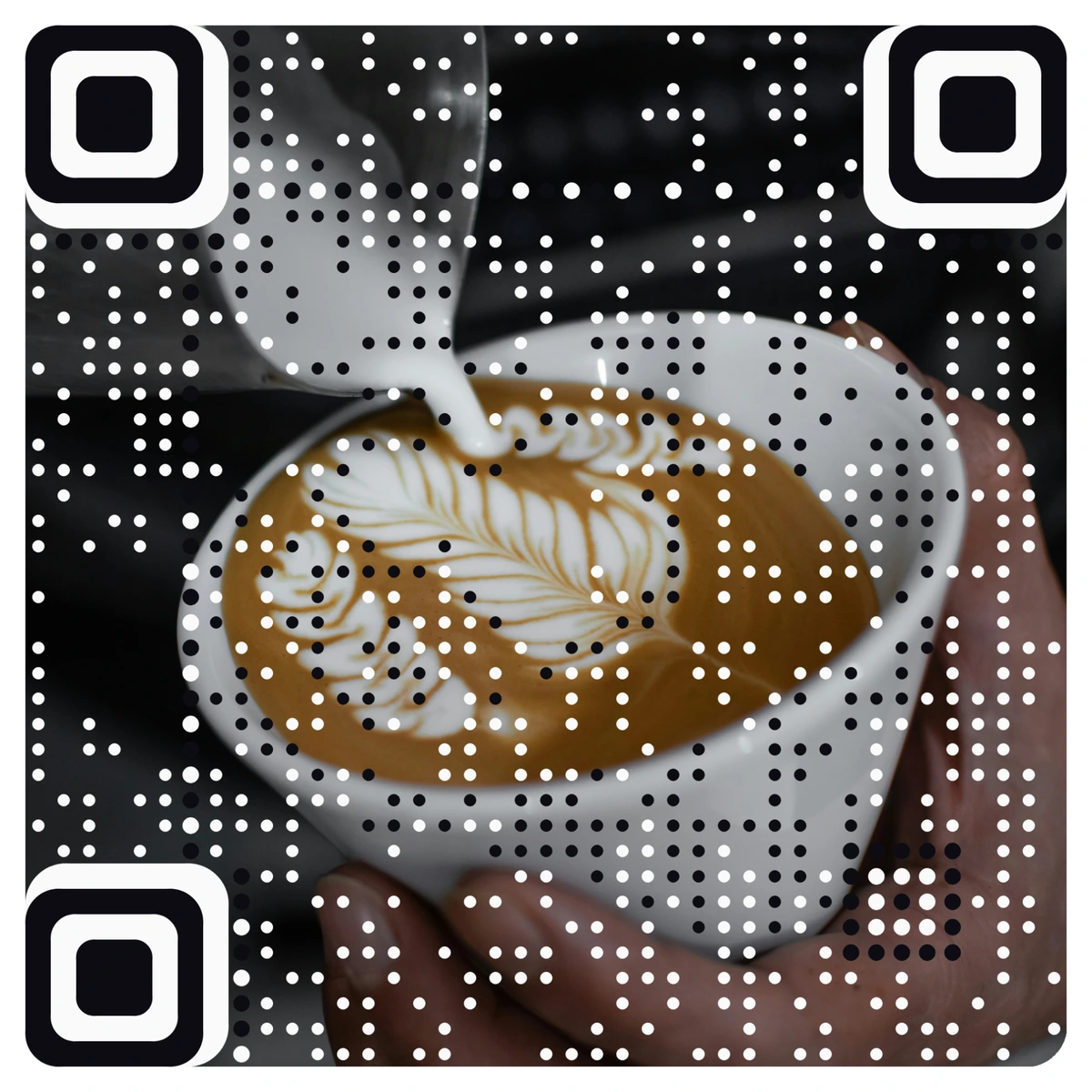
The picture stays the picture. The code lives inside it as a field of dots, and each one is verified on real decoders under real-world conditions before download, so Claire sees a clear verdict before anything goes to the printer.
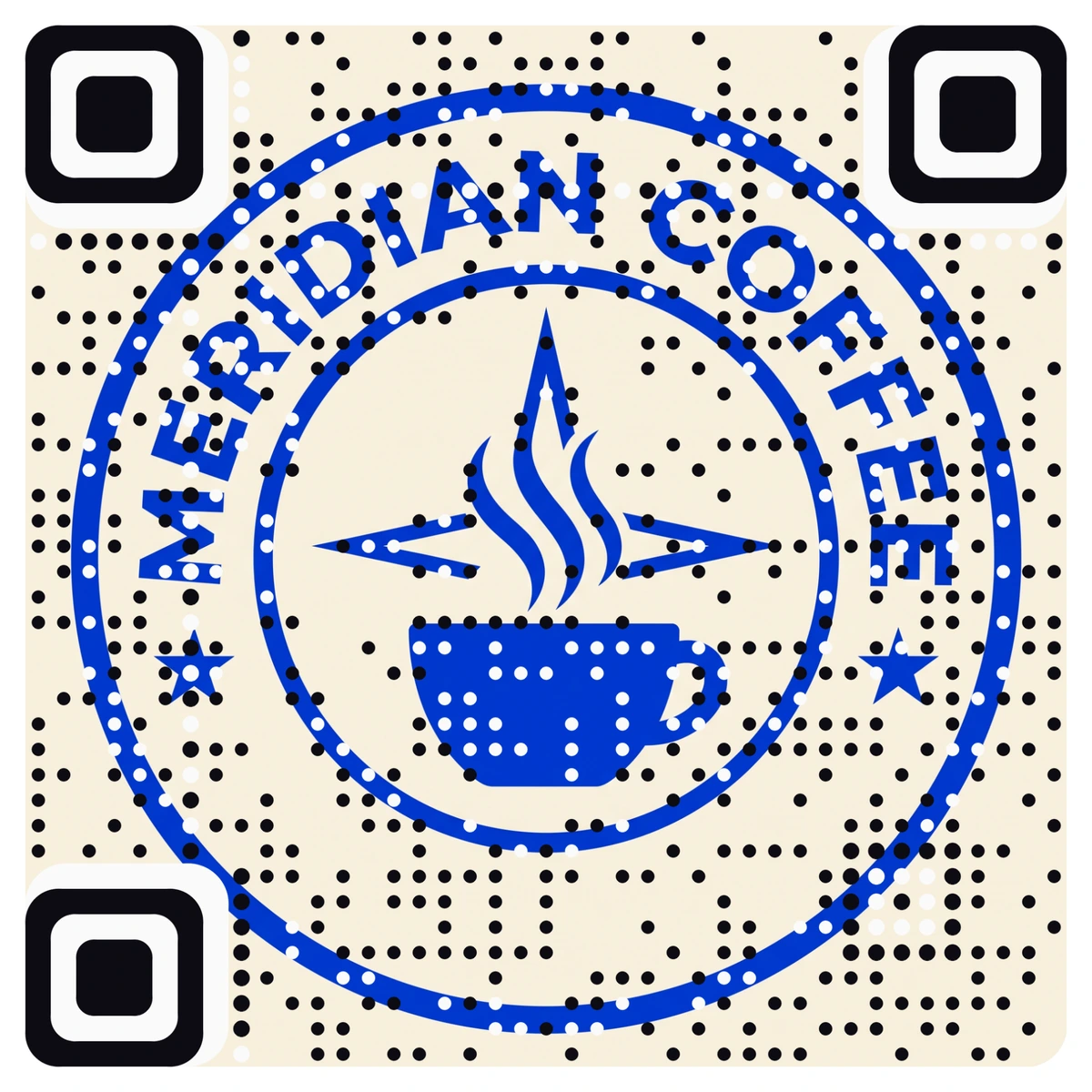
The latte code goes on the table tents. The logo code goes on the window, the takeaway cups and the loyalty card. Same café, two looks, both scannable. If you want to start from your own mark, the QR code with logo page walks through it.
What the table tent opens
A plain menu PDF was the weakest part of the old setup. It is hard to read on a phone and it goes stale. So Claire points the table code at a short mobile page instead, with three buttons in this order:
- Menu. The current menu, readable on a phone, with the seasonal drinks at the top.
- Order from your table. A link to the ordering system she already uses.
- Leave a review. A Google review link, so a happy customer can say so in two taps.
AriaQR has a code type for each of these on its own: a PDF or menu file, a website link, and a Google review code (Yelp and Tripadvisor review codes exist too). Claire could also add a Wi-Fi code on the counter, which works offline because the network details are stored in the code itself.
Because the table code is dynamic, its printed link never changes. When the autumn menu replaces the summer one, Claire edits the destination in her dashboard. The tents stay on the tables.
What the café learns from the scans
The old grey codes told Claire nothing. The new ones come with analytics, and a few numbers change how she runs the room.
When people scan. The hour-of-day heatmap shows scans in the customer's local time. If the busiest scanning hour is mid-morning, that is when the menu page should lead with pastries, not lunch.
Which tables scan. Claire makes the table tents as placements: one campaign, a separate code for the window bar, the main room and the patio, all with the same latte art. The dashboard compares them side by side. If the patio barely scans, maybe the tents there are in direct sun, or face the wrong way.
Which phones. The device split tells her whether her ordering page needs to work well on one platform in particular.
Whether anything broke. Daily link-health checks and an email alert mean she hears about a broken menu link before a customer does.
None of this needs a login from the customer and nothing asks them for permission. Unique visitors are counted without cookies.
The result: same tables, a different first impression
Here is what changes, in plain terms, for a café like Claire's:
- The code looks like it belongs. A latte on the table tent reads as part of the café, not a sticker from a vendor. That also makes it harder to fake: a plain code taped over a plain code is easy to miss, while a stranger's sticker on top of your latte art stands out.
- The menu is always current. One edit, no reprint.
- Reviews are asked for by the table, not the barista. The request sits quietly next to the cup.
- Decisions come from data. Which zone scans, which hour, which device.
What Claire does not get is a miracle. A beautiful code on a tent card nobody can see still goes unscanned. The basics still matter: put the code at eye level when seated, add a short line such as "Menu, order and reviews", and test it on a couple of phones before printing a batch. Once a month, walk the tables and check that every tent is upright and nothing has been stuck on top.
If loyalty and coupons are next on your list, coupon, loyalty and review QR codes covers how to run them from the same kind of code.
Where to start
Pick the one picture your customers already associate with you: your best latte, your logo, the front of the shop. Make one picture code from it, point it at a short page with menu, order and review, and print it on a few table tents first. Set up placements if you want to compare areas of the room. After two weeks, look at the heatmap and the placement split, then print the rest.