
Why do so many jewelry store QR codes look like they belong on a parking meter? A store spends years on lighting, cases and boxes, then prints a grey square on the card. The fix is simple: let the product, or the brand's own mark, become the code, and point it at something a buyer actually wants after the sale.
This guide covers what works, what does not, and which AriaQR code types fit a jewelry business.
Why jewelry stores need better QR codes
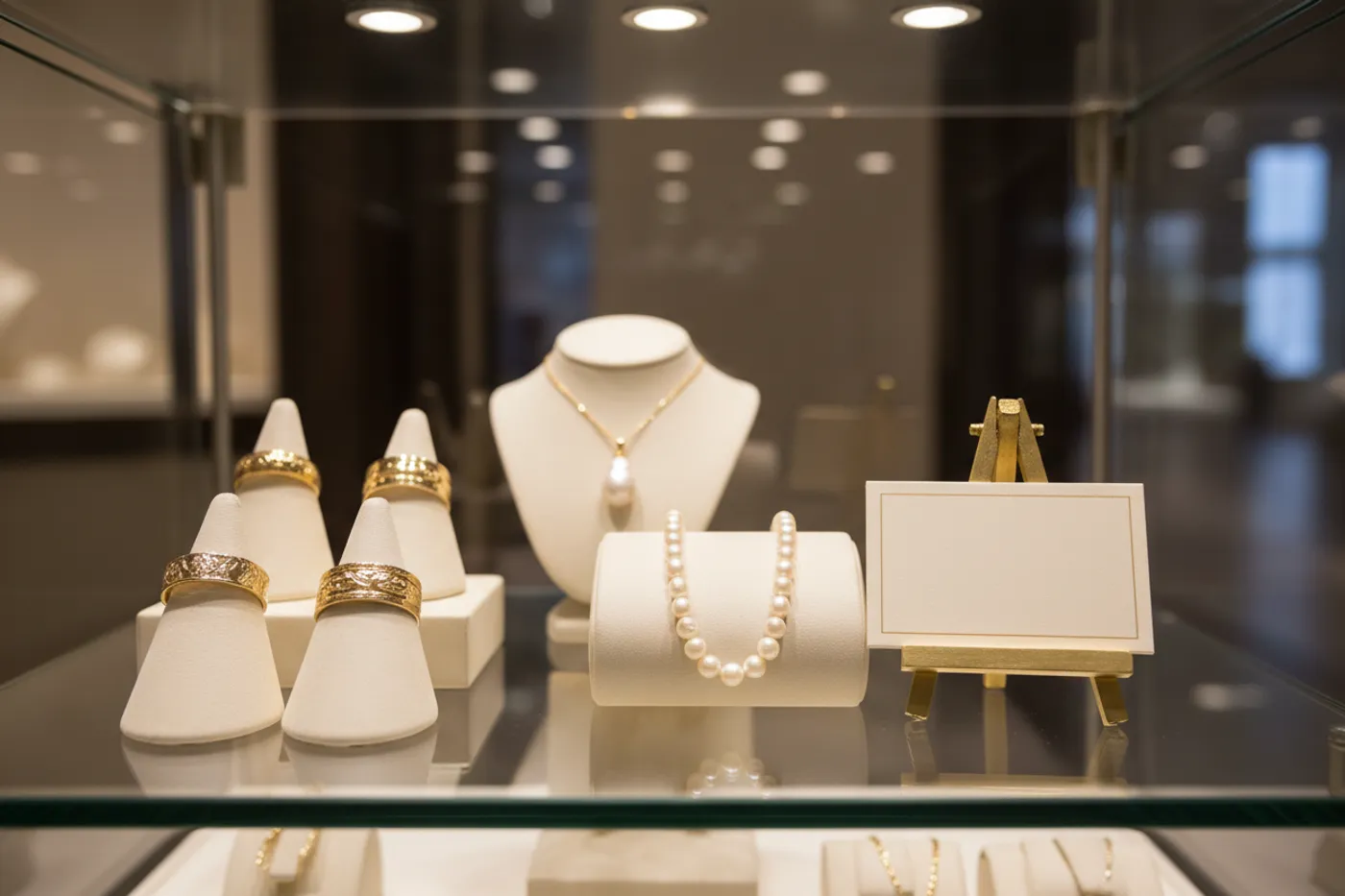
Jewelry is bought with the eyes. Every surface the customer touches, from the case to the ribbon on the box, says something about the price and the care behind the piece.
A plain code breaks that. It is the one object in the room that looks mass-produced. It is also the object that carries the most practical value: the certificate, the care guide, the warranty.
A picture code solves the look. The image stays the image, and the code lives inside it as a field of dots. Here is a real one, made from Vermeer's Girl with a Pearl Earring, the kind of art a store might use for a pearl collection:
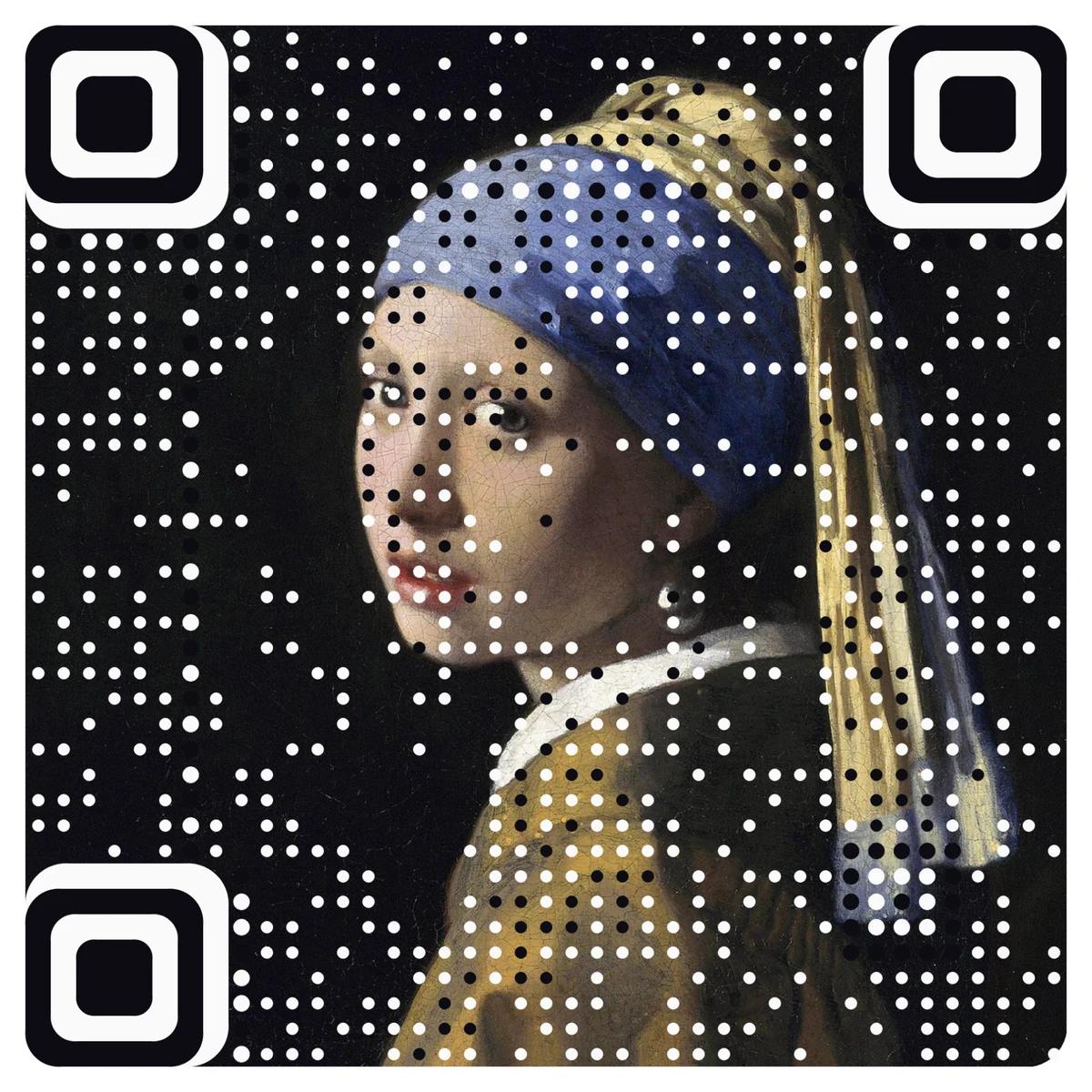
A photo of your own signature ring, a close-up of a pendant or your logo works the same way. Each code is verified on real decoders under real-world conditions before download.
Seven jewelry store QR code uses that earn scans
Pick the ones that match your store. Each can be its own code, or one code can open a short page that holds several.
- Certificate and appraisal. Put a code on the certificate card that opens the grading report or appraisal as a PDF or web page. Buyers keep it for insurance; heirs find it decades later.
- Care and cleaning guide. How to clean gold, store pearls and protect plated pieces. This is the page people come back to.
- Ring sizing and consultations. A booking code on the window or the counter card lets someone reserve a sizing, engraving or bridal consultation after hours.
- Warranty registration. A short form that captures the buyer's name, email and the piece. On AriaQR this is a landing page with a form block (forms are part of the Business plan).
- Gift message video. A code on the gift card that plays a short video the giver recorded. The code is dynamic, so the video can be set the day the gift is wrapped.
- The maker's story. For handmade or designer pieces, a page with the bench, the sketches and the person who made it.
- Reviews. A Google review code on the receipt envelope, not on the counter while the customer is still deciding.
Which code types fit
AriaQR has more than 60 code types. For a jewelry store, these are the ones you will use most:
| Job | Code type |
|---|---|
| Certificate, appraisal, care guide | PDF, or a website link |
| Sizing, engraving, bridal consultations | Booking |
| Gift message | Video |
| Warranty and enquiries | Landing page with a form |
| Store contact on the box | Contact card (vCard) or WhatsApp |
| Directions to the store | Location |
| After-sale reviews | Google review |
| Following the brand | Social profile |
Most are dynamic by default. The printed code holds a short link, so you can change the destination later, and every scan is counted.
What does not work
A few patterns waste good packaging:
- A code on a tiny swing tag. Ring and earring tags are often too small for any code to scan reliably. Use the box insert or the display card.
- A code to the homepage. A buyer who just spent real money on a piece wants that piece's certificate and care, not your front page.
- A code that changes hands blindly. For certificates, keep the destination stable and monitored. Daily link-health checks and a broken-destination alert help you catch a dead link before a customer does.
- A code that looks cheap. If it is the only grey object in a velvet box, it reads as an afterthought.
If you style a code rather than use a photo, keep it in your palette. This is a real code from the AriaQR design library in a gold foil style:
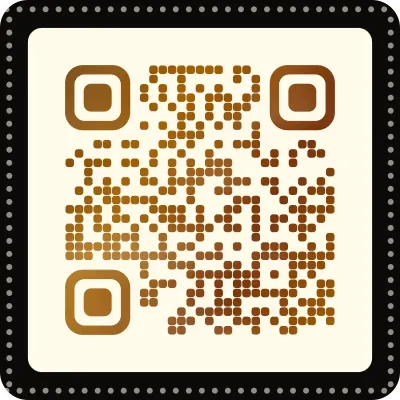
You can browse more styles like this in the QR code designs library.
Size, print and trust
Jewelry packaging is small. AriaQR's small print build is verified down to about 1.5 cm, enough for most box inserts, gift cards and certificates. Our post on small print QR codes covers when to use it. Always test a printed proof on the real card stock, especially on foil or textured paper.
Trust matters more when the product is valuable. People are rightly careful about codes that ask for details. Point codes at your own domain where you can, never ask for payment details on a page reached from a box code, and tell customers where your codes lead. AriaQR checks every destination for known threats when a code is made, when it is edited and daily after that, and brands can verify their domain so their codes show as verified on a public check page.
Reading the scans
Scan analytics show when and where codes are used. For a store, a few questions are worth answering:
- Do gift-card codes get scanned on the day of a holiday or the week after?
- Is the window booking code scanned after closing time? The hour-of-day heatmap shows it.
- Which packaging piece earns the most scans? Give the box, the certificate and the gift card their own placements and compare them side by side.
For gifting ideas beyond jewelry, see QR code gift ideas.
Where to start
Start with the item that goes home with every sale: the certificate card or the box insert. Make a picture code from your signature piece or your logo, point it at a care-and-certificate page, and print a small run. Then add the booking code for the window.