
Can famous paintings turned into QR codes still look like the paintings and still scan? Yes: every one below opens a page with an ordinary phone camera, and the Mona Lisa is still unmistakably the Mona Lisa. Below are six of them, oldest to newest, with a line about each work and why it makes a good code.
All six are public-domain works, which is what makes them free to reuse like this. Point your phone at any code on the page.
Famous paintings turned into QR codes: Leonardo and Vermeer
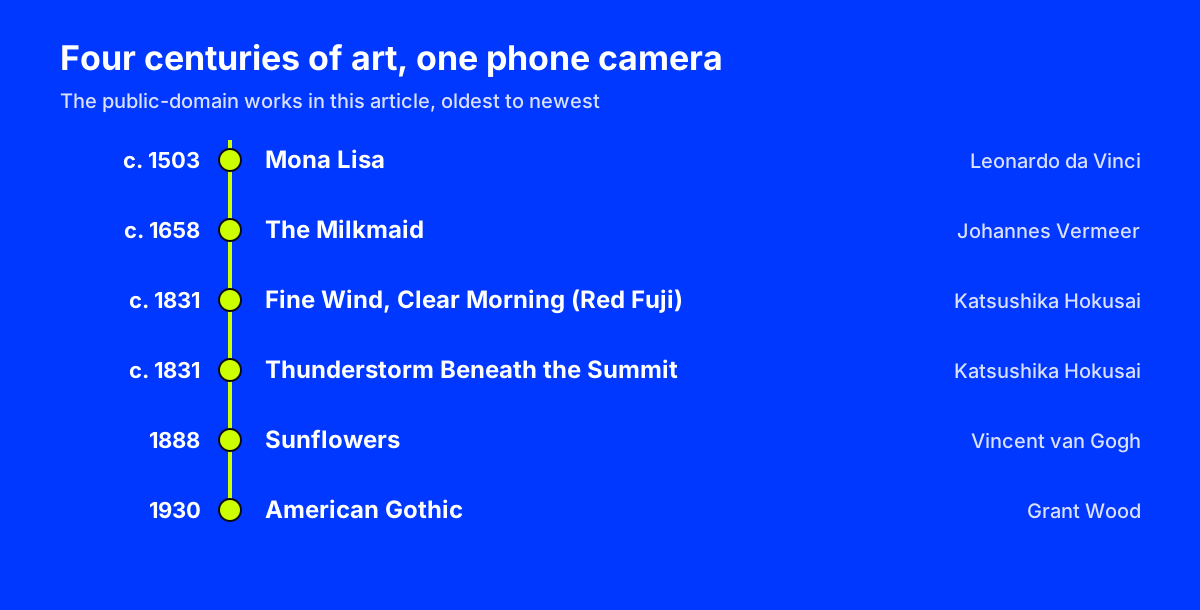
- Mona Lisa, Leonardo da Vinci, begun around 1503. Perhaps the most famous portrait in the world, it hangs in the Louvre in Paris. A single face in the center, soft muted colors and a calm background make it an ideal code.
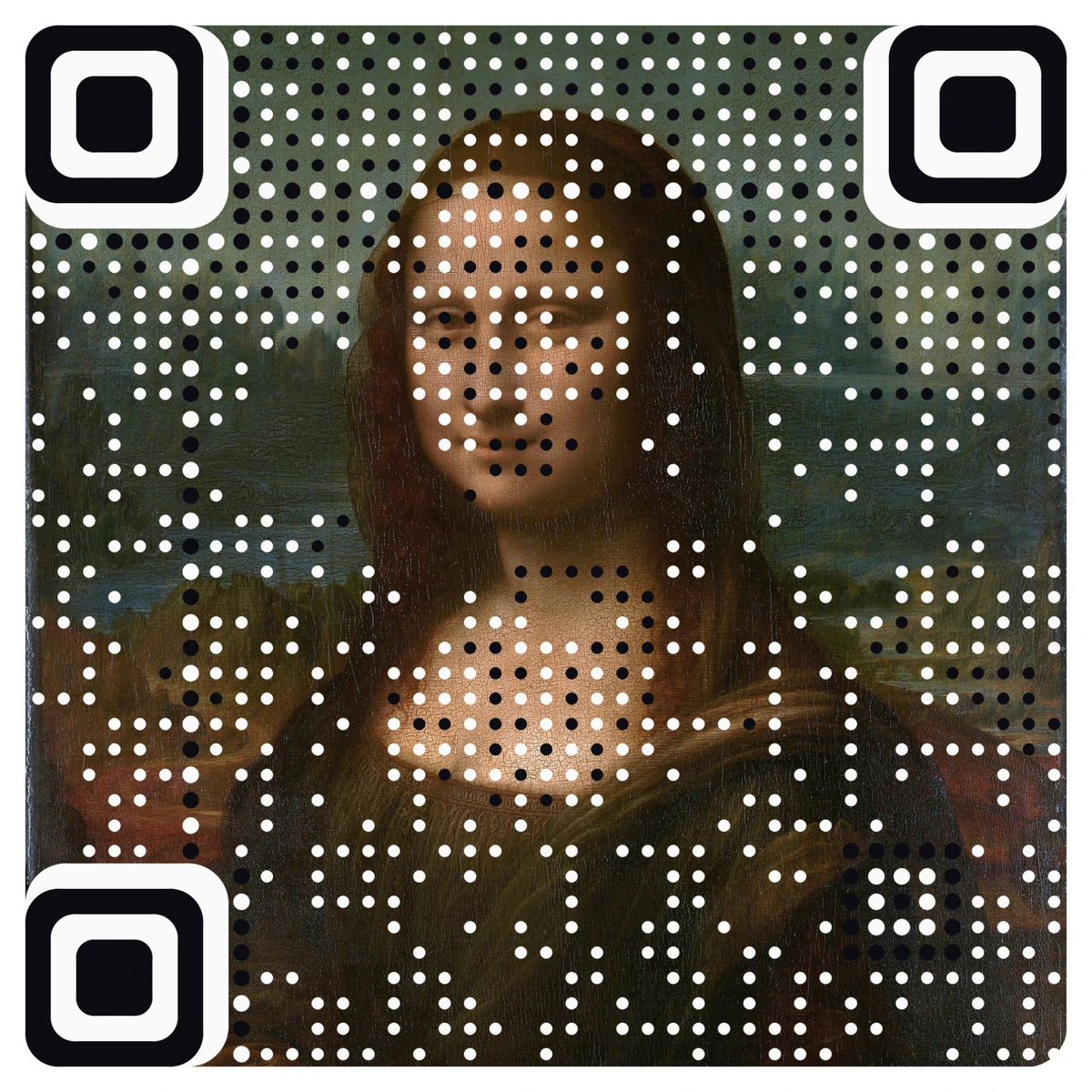
- The Milkmaid, Johannes Vermeer, around 1658. A kitchen maid pours milk in the window light, in the Rijksmuseum in Amsterdam. That bright blue and yellow against a pale wall keeps her figure clear.
Japanese woodblock prints
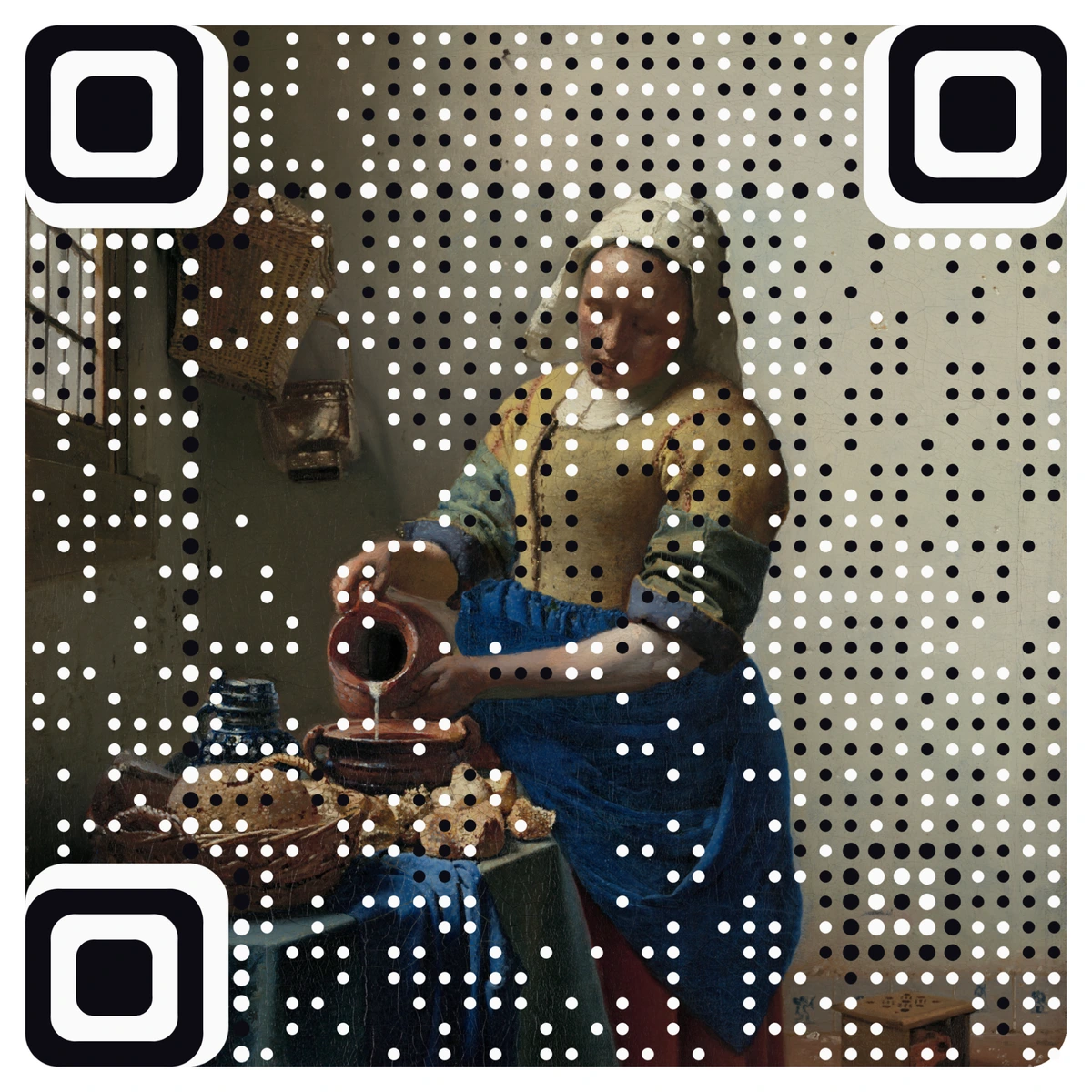
Woodblock prints are made for this. Flat areas of color, bold outlines and strong shapes read clearly as both art and code.
- Fine Wind, Clear Morning, Katsushika Hokusai, around 1831. Known as Red Fuji, from the same series: the mountain turned red by early light. Three bands of color make one of the cleanest codes we have.
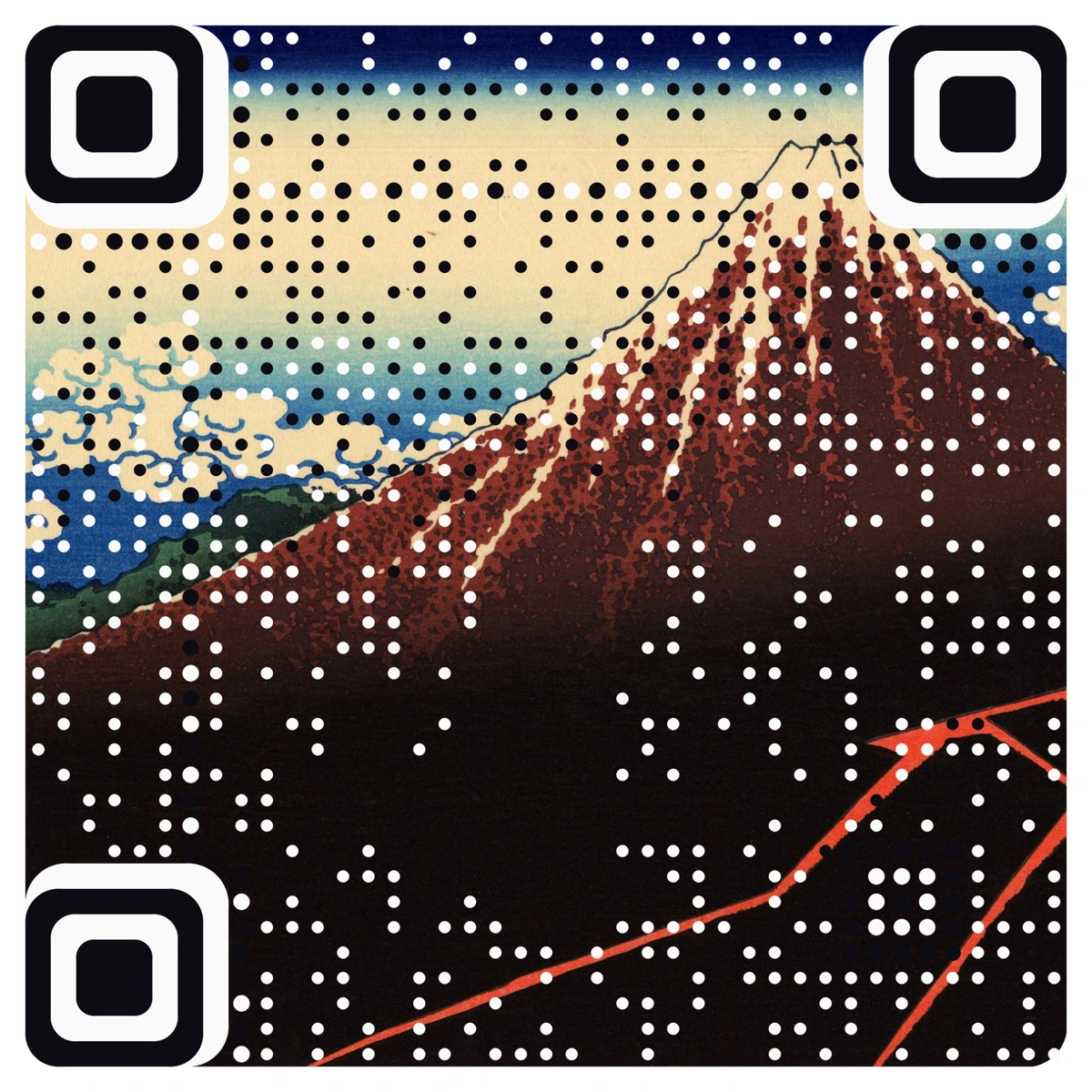
- Thunderstorm Beneath the Summit, Katsushika Hokusai, around 1831. The same mountain, this time with lightning at its foot. It leads our gallery for a reason.
Van Gogh
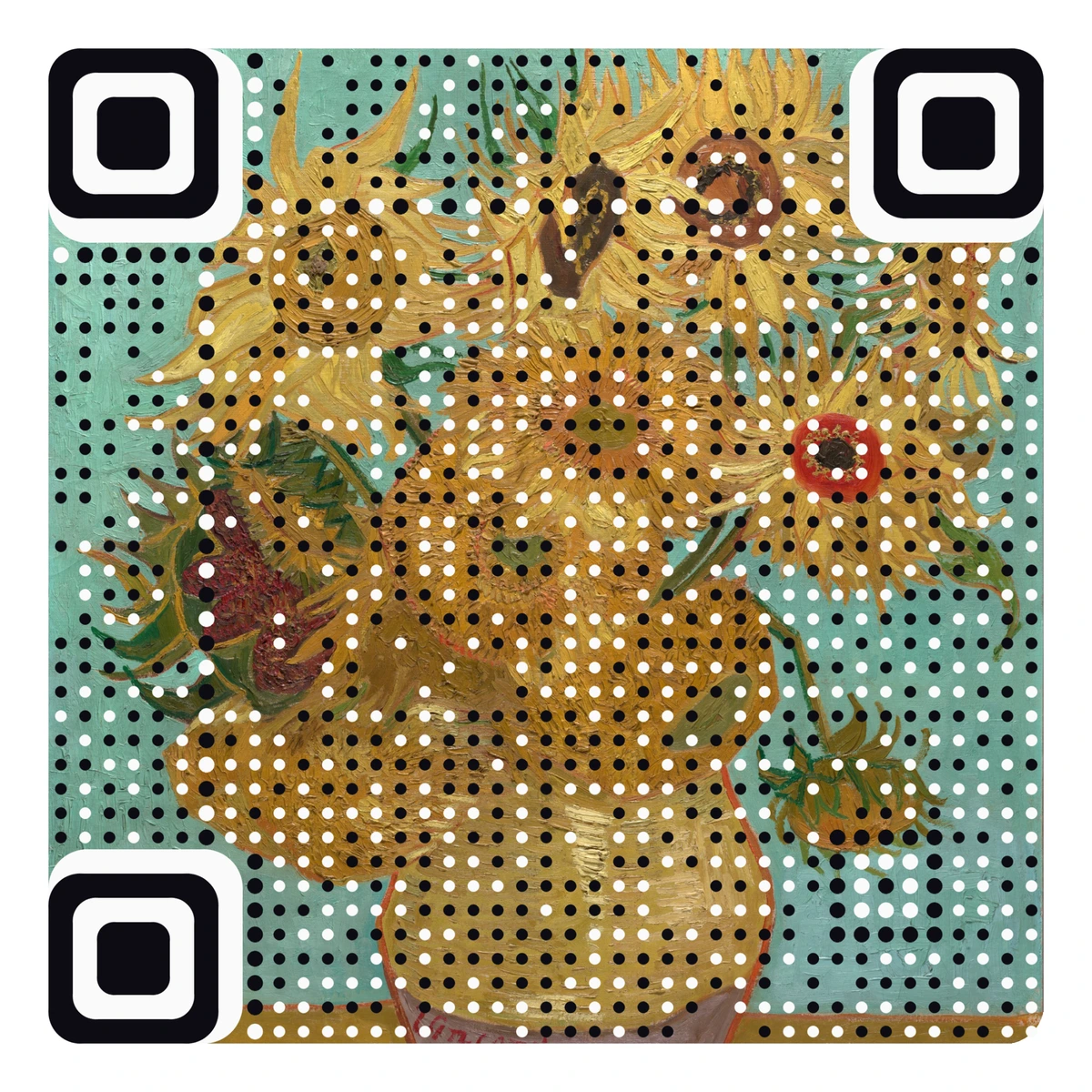
- Sunflowers, Vincent van Gogh, 1888. He painted a series of them in Arles, and versions now hang in London, Amsterdam and beyond. Warm yellows on teal give the code plenty of contrast.
Into the twentieth century
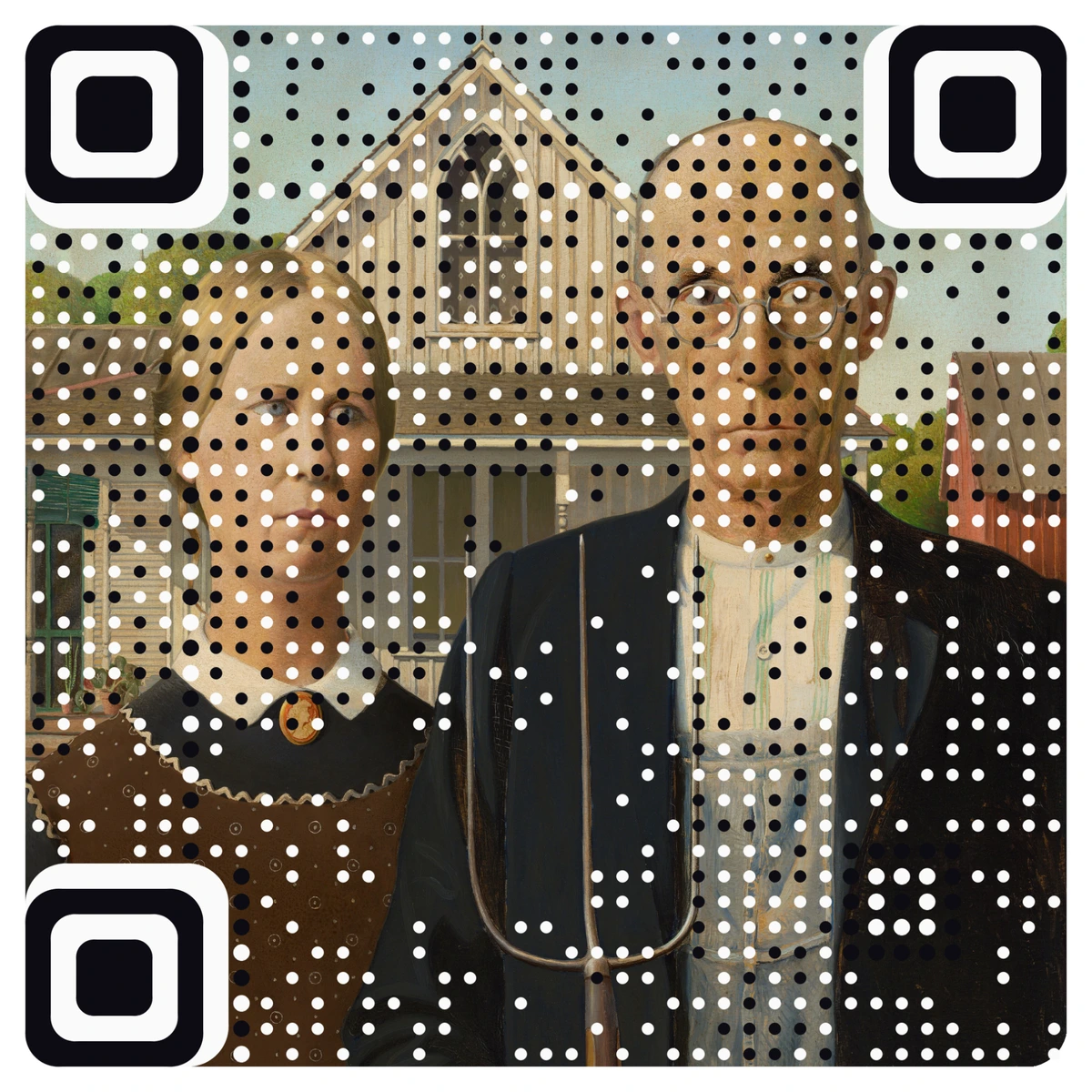
- American Gothic, Grant Wood, 1930. The models were the artist's sister and his dentist, and the painting is at the Art Institute of Chicago. Two faces, a pitchfork and a farmhouse window: simple shapes, instantly known.
How to turn a painting into a QR code
- Start from a clean, open-access image. Many museums publish free, high-resolution files of their public-domain collections. A sharp file with true colors gives the best result.
- Upload it to a picture QR code generator. You choose what the code should do: open a website, a menu, a playlist, a contact card and more. The painting stays the painting, and the code lives inside it as a field of dots.
- Check the preview and the verdict. Every AriaQR code is verified on real decoders under real-world conditions before download, and the site tells you if a design only scans up close.
- Print it at the size people will see it. Standard codes are made for screens and prints of 4 cm and up, so a postcard works as well as a poster.
Where a painting QR code works
- Museum and gallery shops. A print or postcard of the painting that opens the story behind it.
- Event invitations. A gala invite where the artwork itself opens the RSVP page.
- Art classes and workshops. A poster of the week's painting that opens the lesson notes or a sign-up form.
- Cafés and restaurants. A framed print on the wall that opens the menu, so the code is decoration first.
- Personal gifts. A favorite painting on a card that opens a video message.
Because the code is dynamic, you can change where it goes after printing, and every scan is counted. The same print can open a summer menu in June and a holiday menu in December.
Why these paintings make good QR codes
They share the traits of any strong picture code. One clear subject, strong contrast between subject and background, a few bold colors, and calm corners where the code's three finder squares sit. Faces, mountains and big flowers do well. Busy crowd scenes with dozens of small figures are harder to keep readable as a picture. We cover more of this in the most beautiful QR codes we have made.
Are famous paintings free to use?
Everything here is in the public domain: the copyright has expired, so anyone can reproduce the work. Grant Wood's 1930 painting is the youngest on the list. If you make your own, start from an open-access image, since a particular photograph can come with its own terms. Many major museums now publish free, high-resolution images of their public-domain collections.
Galleries and museums can go further, with a code on a wall label that opens the audio guide, using the artwork itself. QR codes for museums has ideas.
Where to start
Pick a painting you love, or one that fits your brand, and upload it to the artistic QR code generator. Look at the preview, then print it big. A poster of Red Fuji that opens your website is a lot more interesting than a black square.