
Can a donation QR code on a poster really raise money? It can, if the code is easy to trust, opens a page that asks for one thing, and lives on a poster people stop to look at. Here is how that works in one illustrative example, from a forgettable flyer to a campaign the team can measure.
The problem: a poster that people like but do not act on
Picture a small bird rescue in Burlington, Vermont, run mostly by volunteers. Call the director Megan. Every spring the rescue runs an appeal for its new flight aviary. Volunteers pin posters in cafés, libraries, the farmers market and the vet's waiting room.
People like the posters. Some take a photo. Very few go home and type the long donation address printed along the bottom.
Megan adds a QR code the next year, a plain one in the corner. It helps a little. But she has no idea which posters work, the code looks out of place next to a beautiful photo of a macaw, and a volunteer asks a fair question: how would a donor know the code is really ours?
The fix: one strong image, one clear ask
Megan makes the rescue's best photo the code. The picture stays the picture, and the code lives inside it as a field of dots.
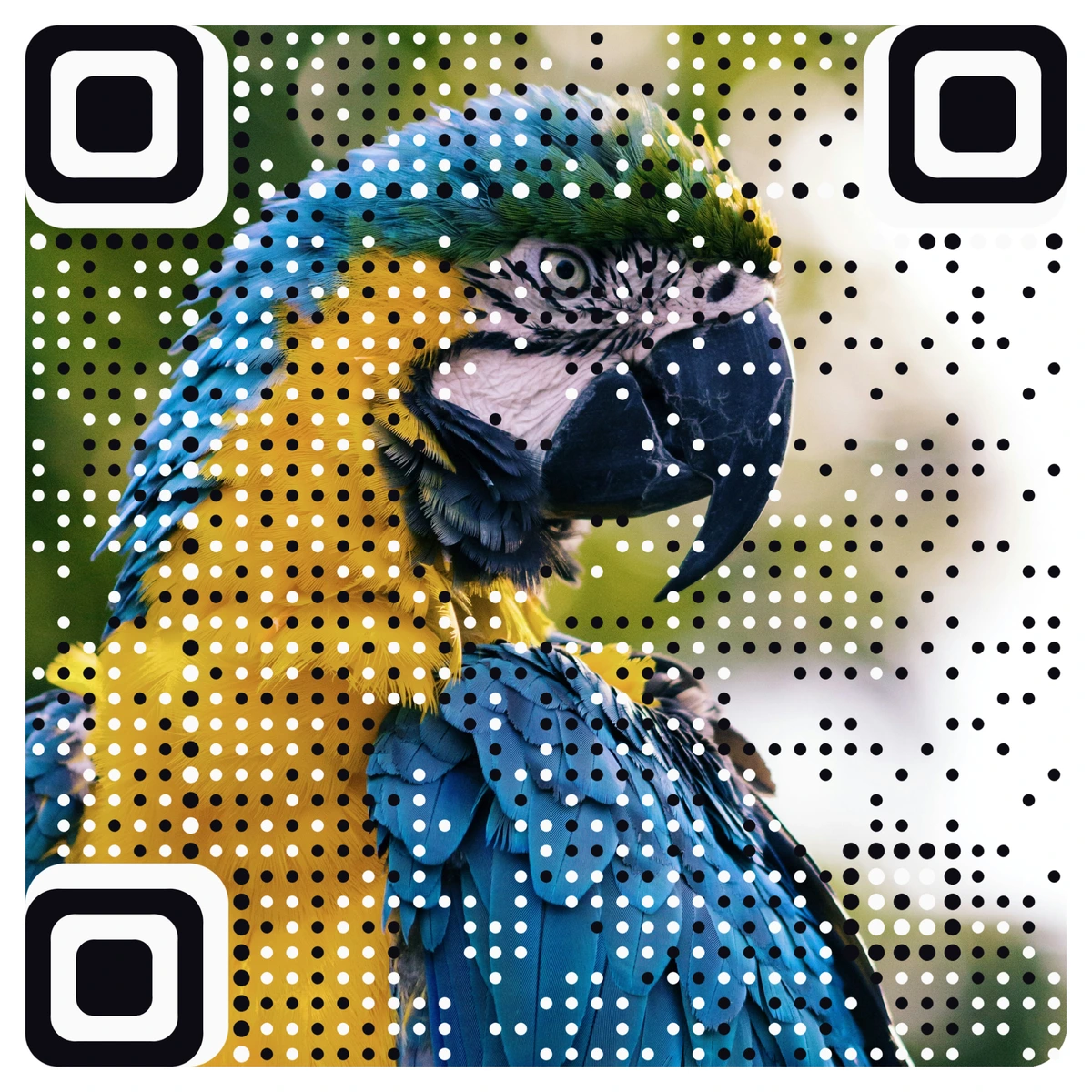
Every AriaQR code is verified on real decoders under real-world conditions before download, so Megan sees a clear verdict before she prints a batch for the volunteers.
The poster gets a short line next to the code: "Scan to help build the aviary." No other links, no list of social profiles. One ask.
Where the donation QR code should lead
The page a donor lands on decides whether the scan turns into a gift. A few rules hold for any non-profit:
- Go straight to giving. The code should open the donation page, not the homepage with a donate button somewhere in the menu.
- Keep the form short. Amount, name, payment. Anything else can come later.
- Show what the gift does. One photo and one sentence: what a gift pays for.
- Make it work on a phone. Most people scanning a poster are standing up, with one hand free.
AriaQR has code types for the common options. A website code opens your own donation page or your fundraising platform. PayPal, Venmo and Cash App codes open your profile on those services directly. For a benefit evening, a tickets code sells seats and a calendar event code saves the date to a phone.
If you want one code to cover several options, a short landing page can hold a photo, a line about the appeal and a button for each way to give.
Which poster raised interest? Placements tell you
Megan's real question was which posters worked. The answer is placements: one campaign with a separate code for each spot, all using the same macaw artwork.
- Café on Church Street
- Public library
- Farmers market stall
- Vet's waiting room
- The rescue's own front door
The dashboard compares the placements side by side. It counts scans, not donations, but scans show where people stopped and acted. Each placement can carry UTM tags on its link, so the donation platform's reports can show which poster the donor came from. Our guide to placements and campaign tracking shows the setup.
The hour-of-day heatmap adds one more clue: if the market poster is scanned on Saturday mornings, that is when a volunteer with a tablet should stand next to it.
Trust and safety: make your code easy to believe
Donors are right to be careful. Fake codes stuck over real ones are a known scam, and a charity poster in a public place is an easy target. A few habits protect both the rescue and its supporters:
- Use your own domain where you can. A donation page at your own address is easier to trust than one somewhere unfamiliar.
- Tell supporters what your codes look like. Say on your website and social pages that your codes always show your bird photos and open your own donation page.
- Walk the posters. Once a week, check that nothing has been stuck over the code and scan a few to confirm they still open the right page.
- Never ask for donations by code in an unexpected email. Supporters who know this will spot a fake that does.
AriaQR adds its own checks. Every destination is checked for known threats when a code is made, when it is edited and daily after that, and anyone can report a code. Payment codes are protected: changing where a PayPal, Venmo or Cash App code points needs the owner's signed-in account, and it can only point to another payment link. Organizations can also verify their domain, so their codes show as verified on a public check page.
Picture codes help here too. A stranger's plain sticker on top of a macaw photo stands out in a way a plain code on a plain code does not. Our guide on how to check if a QR code is safe is worth sharing with volunteers.
The result
After the spring appeal, Megan knows which locations to print for next year, which day to staff the market stall, and that the macaw photo works as a code. The posters stay up after the appeal ends, and she points the codes at the volunteer sign-up page instead of reprinting.
Budgets matter for any non-profit. If you just need a plain code to start, the free QR code generator makes a classic code with an editable link and analytics at no charge, and you can move to a picture code for the posters that matter most.
Where to start
Pick one appeal and one image. Point the code at a mobile donation page with one ask, make a placement for each poster location, and print a small batch. After two weeks, compare the placements and print more for the spots that work.