
Can a QR code really bring you more customers? It can, but not by itself: a QR code is a bridge between someone's interest and your shop, not a magnet that creates interest. When the code sits in the right place, promises something useful and opens a fast page, it turns "maybe later" into "done", and that is where new customers come from.
This post is the honest version. No promised percentages, just what makes a code earn its spot and how to check that it does.
Why a QR code alone is not a marketing plan
Picture a code taped to a counter with no words around it. Some people will scan it out of curiosity. Most will not, because nothing tells them why they should.
A QR code removes typing. That is its whole job. It makes a step easier for someone who already wants to take it. So the real question is not "do QR codes work" but "is there a step people want to take right here, right now?"
If the answer is yes, a code helps. If the answer is no, a better code will not fix it.
What makes a QR code bring in customers?
Four things decide whether a code earns its place. Miss one and the other three struggle.
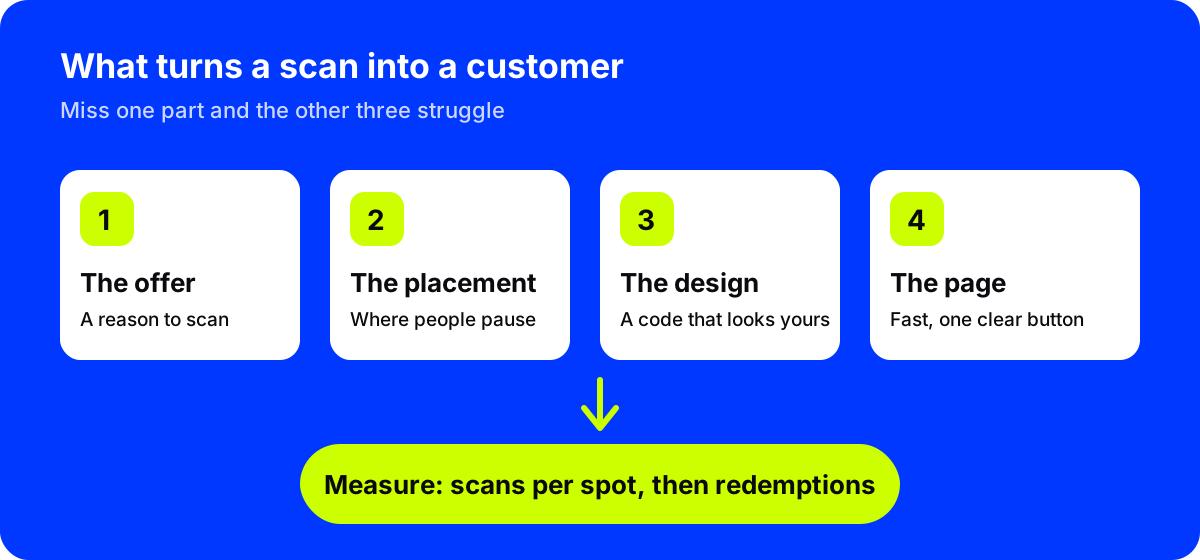
- An offer. A reason to scan, written in words next to the code. "Scan for this week's specials", "Scan to book a table", "Scan for a welcome treat on your first visit". The words do more work than the code.
- A placement. Where interested people pause: the shop window, the queue, the receipt, the table, the bag. A code on a busy wall nobody stops at is wallpaper.
- A design people trust. A plain black square on a careful brand looks like an afterthought, and an unfamiliar code can feel risky. A code that carries your logo or your product looks like it belongs to you.
- A good page. The scan should open something fast, made for a phone, with one clear button. A slow home page or a heavy PDF loses people in seconds.
Our guide on what a QR code should link to goes deeper on that last point.
The offer: give people a reason
Most codes fail at the offer, not the scan. "Scan me" is not an offer. It is a request.
A good offer is specific and immediate. It answers "what do I get?" in under a second. A few that suit most small businesses:
- Book or order now, when the shop is busy or closed.
- See the full menu, price list or catalog, when the counter is too small to show it.
- Get a first-visit discount, when you want walk-bys to come back.
- Join the list for new arrivals, when you sell things that sell out.
The placement: where people pause
Think about where someone stands still with their phone in hand. The line at the till. The table while they wait. The window when the shop is closed. The bag they carry home.
Put the code at eye level in those spots, large enough to scan from where people stand. One code in the right place beats five codes scattered around the room.
The design: a code that looks like yours
People scan codes from brands they recognize more readily than anonymous squares. That is common sense, and it is why a branded code matters for a small business.
Here is the same idea, two ways. On the left, a plain code. On the right, a real AriaQR code made from a burger bar's logo.
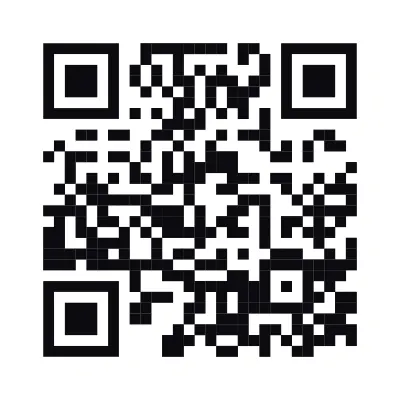
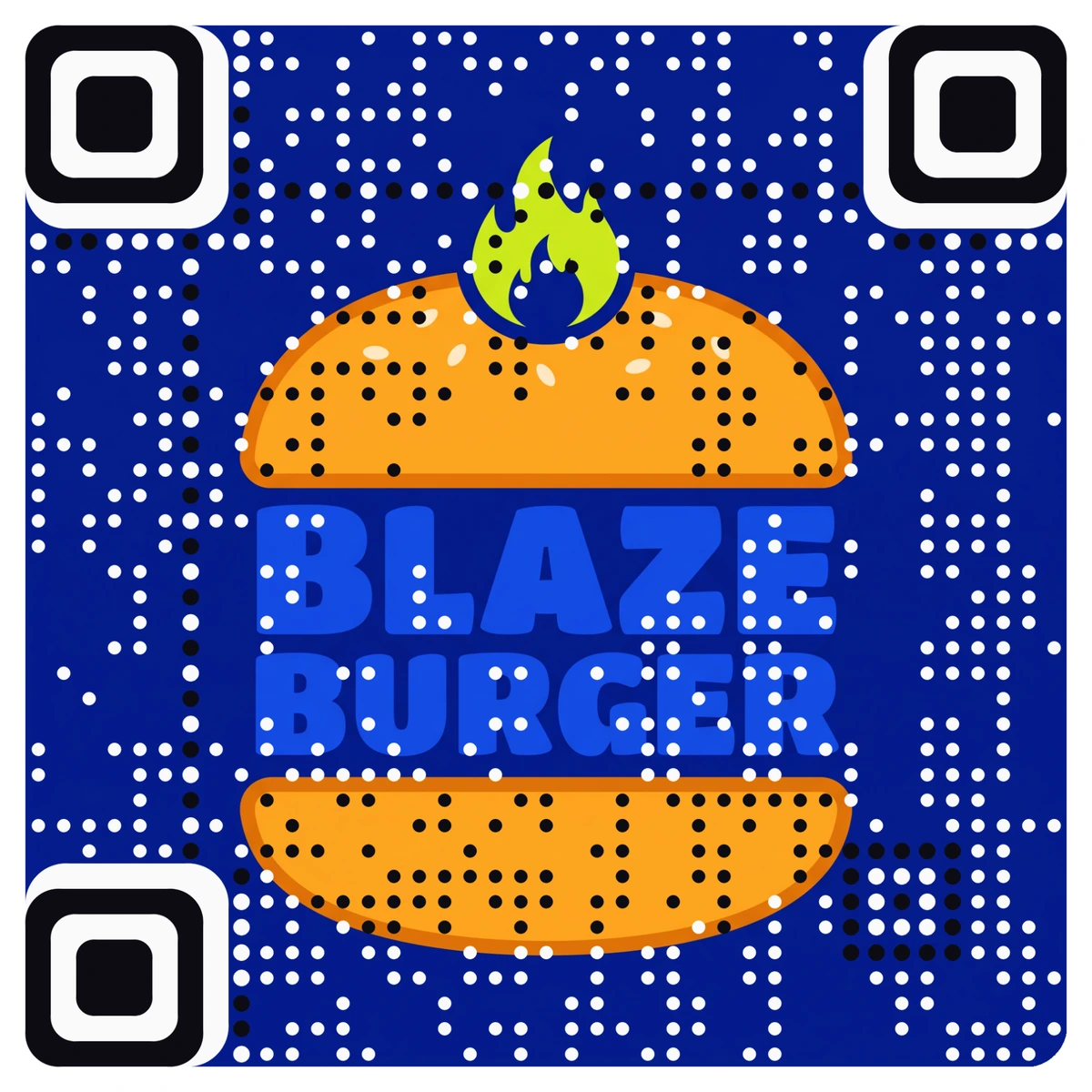
Both scan. Only one tells the passer-by whose code it is. With AriaQR, the picture stays the picture and the code lives inside it, and every code is verified on real decoders under real-world conditions before you download it.
The page: what happens after the scan
The page is where the customer is won or lost. It should load fast, fit a phone screen and lead to one action: book, order, claim, call or sign up.
If you do not have a page like that, you can build one. AriaQR landing pages give you mobile pages with offers, opening hours, maps, booking buttons and sign-up forms, and the code points straight at them.
How do you measure if your QR code brings more customers?
Here is the part most businesses skip. A static code is a black box: you print it and hope. A dynamic code counts every scan, so you can see what is happening.
Watch these numbers:
- Total scans and unique visitors. Is anyone using it at all?
- Scans per day and by hour. Do scans follow your opening hours, or happen after you close?
- Scans per placement. Give the window, the counter and the flyer their own codes and compare them side by side. Our guide to placements and campaign tracking shows how.
Then tie scans to something you can count in the shop. Use an offer code at the till, ask "how did you hear about us?", or count bookings that came from the page. Scans alone show interest. Redemptions show customers.
What a QR code cannot do
Be fair to the method. A QR code cannot:
- Fix a weak offer or a product people do not want.
- Reach people who never walk past your sign.
- Replace a person at the counter who says "scan this for the menu."
What it can do is catch interest at the exact moment it happens, even when you are busy or closed, and show you which spots are worth the paper.
Where to start
Pick one spot where people already pause. Write one clear offer. Point a dynamic code at a fast mobile page, put your brand on the code, and check the scans after two weeks. If that spot works, add a second placement and compare.