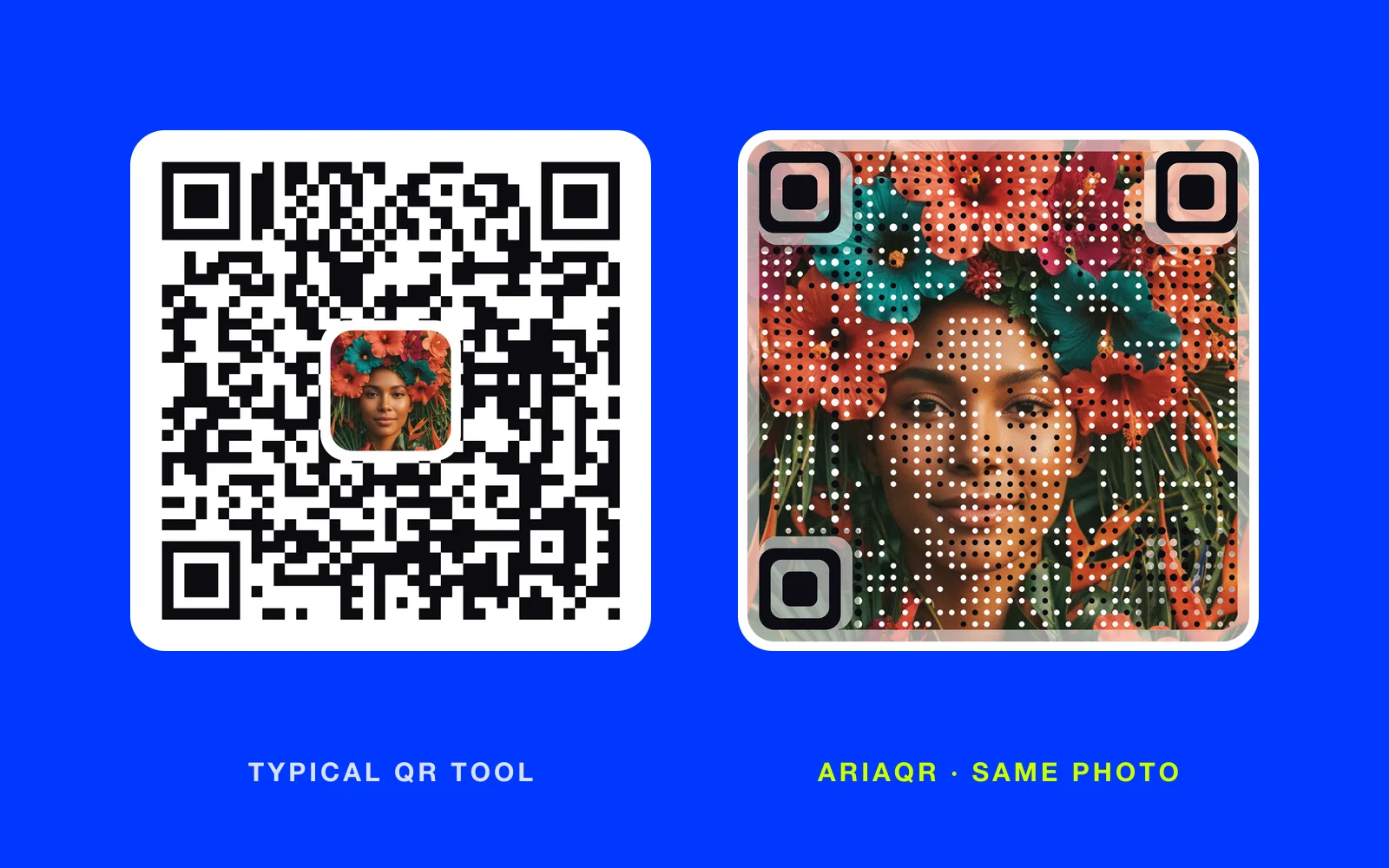
Bitly is a link shortener first and a QR code generator second: its codes are built on Bitly short links, which gives you editable destinations and click analytics in the same dashboard you already use for links. AriaQR makes the code out of your image, verifies it on real decoders before download, and tracks it with placements, heatmaps, and location. If your workflow already runs on Bitly links and you need a standard code with a logo, Bitly is the natural choice; if the code needs to be the artwork and be proven to scan, AriaQR is.
Does Bitly make QR codes?
Yes. Bitly is one of the best-known names in link management, and it offers QR codes as part of that platform. In general terms, you shorten a link, generate a code that points to it, pick colors, and optionally add a logo. Because the code resolves through a Bitly link, the destination can be managed there, and scans appear in the same analytics as clicks. Bitly also offers link-in-bio pages and team features for organizations that manage many links.
That is a sensible design for a link company. The code is a delivery channel for a short link, and everything about the code inherits from the link: the tracking, the editing, the branding on the domain. If your marketing already lives in Bitly, the QR side slots in without a new tool.
The code itself is a standard grid. You can recolor it and put a logo in the middle; the shape is still squares on a background with a picture on top. That is fine for a lot of print and is what most people expect a QR code to look like.
What does AriaQR do differently?
AriaQR starts from the image, not the link. Upload a photo, a logo, a product shot, or an illustration, and the code lives inside it as a field of dots. The eyes and margins are translucent so the picture shows through. With "Code in your image", the code is placed inside a larger poster or photo and you get the whole artwork back with the code blended in. The difference from a logo-in-the-middle code is shown in regular QR vs AriaQR.
Every code is verified on real decoders under real-world conditions before download: distance, angle, low light, small size. You see the verdict first, "verified" or "scans up close only", and you choose the build: Standard for screens and prints of 4 cm and up, or Small print, verified down to about 1.5 cm for cards, labels, and stickers.
Codes are dynamic by default. Each encodes an AriaQR short link, so the destination can change after printing and every scan is tracked. Wi-Fi and payment codes are static kinds and work offline in any scanner. Accounts are optional: make and buy without logging in, then sign in with Google or an email code to keep every code in one place. AriaQR does not offer team features, bulk generation, or branded short domains today; integrations are webhooks and CSV export.
AriaQR vs Bitly QR codes: side by side
| AriaQR | Bitly QR code generator | |
|---|---|---|
| What the code looks like | The image itself is the code; dots live inside your picture, eyes and margins translucent | Standard grid with colors and a logo in the middle |
| Verification before download | Yes, on real decoders under real-world conditions, verdict shown first | Not advertised |
| Dynamic and editable links | Default for most kinds; static for Wi-Fi and payment | Yes, built on Bitly short links |
| Analytics depth | Scans, unique visitors, hour-of-day heatmap, device and OS, in-app browser, city and postal code, map | Link analytics for clicks and scans |
| Placements and campaigns | Yes, several codes per campaign compared side by side | Campaign-level link tools in their platform |
| Team features | Not today | Yes |
| Bulk generation | No | Check their site |
| Integrations | Webhooks and CSV export | API and integrations |
| Pricing model | Pay once per code, or subscribe (see pricing) | Check their current pricing |
How does Bitly QR code tracking compare with AriaQR analytics?
Bitly's tracking is link tracking. A scan is a click on the short link, and it shows up next to the clicks that came from social posts or emails using the same link. That is a real advantage if you want one number for a campaign across channels, and it is why people search "bitly qr code tracking" as a starting point.
AriaQR's analytics are built around the code and the place it is printed. Every dynamic code shows total scans, unique visitors measured without cookies, scans per day, an hour-of-day heatmap in the scanner's local time, device and OS split, in-app browser detection for Instagram and WhatsApp, and country, region, city, and postal code when the network allows, with a real map and clustering. Location is IP-based, so no one scanning is asked for permission. Placements let you print one code per poster, per store, or per ad, and compare them side by side. Export to CSV, share a read-only link, and get alerts by email or webhook for the first scan, a broken destination, or a digest. Each metric is explained in QR code analytics explained.
Why would a Bitly QR code not work?
Any dynamic code, Bitly's or AriaQR's, depends on two things: the redirect service staying up and the destination page staying live. When people search "bitly qr code not working", the usual causes are ordinary ones: the destination moved, the link was deleted or archived in the dashboard, the code was printed too small, or the contrast was too low. None of that is specific to Bitly. It is the nature of a code that goes through a link.
The difference on AriaQR is what happens before and after. Before download, the code is verified on real decoders under real-world conditions. After, daily link-health checks watch the destination and a broken-destination alert reaches you by email or webhook so you can edit the link before customers hit a dead page. That flow is covered in editable destinations and alerts, and the static versus dynamic tradeoff in dynamic vs static QR codes.
Where to start
If your links already live in Bitly and you want a standard code that reports alongside them, use Bitly's generator and keep everything in one dashboard. If the code is going on artwork you care about, or on print you cannot afford to redo, make it on AriaQR, check the verdict, and download the 2048px master with or without a white border. No account is required.
Who should pick which
Pick Bitly if you are a team that already manages links there, wants scans counted next to clicks, and needs a standard-looking code with a logo. Its team features and link tools are mature, and AriaQR does not offer branded domains, teams, or bulk today.
Pick AriaQR if the code should be the picture, if you want proof it scans before you print, or if you want placements, heatmaps, and location on every code without a team plan. Brand teams, agencies, event planners, real estate, hospitality, and creators are the usual fit. Pay once per code or subscribe; see pricing.