An enterprise QR code generator is judged by people who will never make a code: procurement, legal, security and finance. This post is the checklist they use, what the main platforms generally offer against it, and exactly where AriaQR stands, including what is on enterprise terms rather than in the product.
The checklist
Reliability in print: does every code scan, on every medium, first time? Editability: can destinations change after ten thousand units ship? Data: what is collected about the people who scan, and where is it hosted? Teams: can departments and agencies work in shared spaces? Volume: bulk creation and an API. Finance: sequential invoices, tax handled, purchase orders. Paperwork: DPA, SLA, security questionnaire. And a named person to email.
What the broad platforms generally offer
QR TIGER, Uniqode, Flowcode and Scanova are generally known to address enterprise buyers with team workspaces, bulk generation, APIs, SSO on higher tiers and enterprise agreements. They are established and their sales teams are used to procurement. The codes are styled grids with a logo in the center, and verification before download is not something they advertise. Check each site for the current enterprise offering.
Where AriaQR stands
Reliability: every code is verified on real decoders under real-world conditions before download, and a code that fails is never delivered. That is the line to put in the risk register.
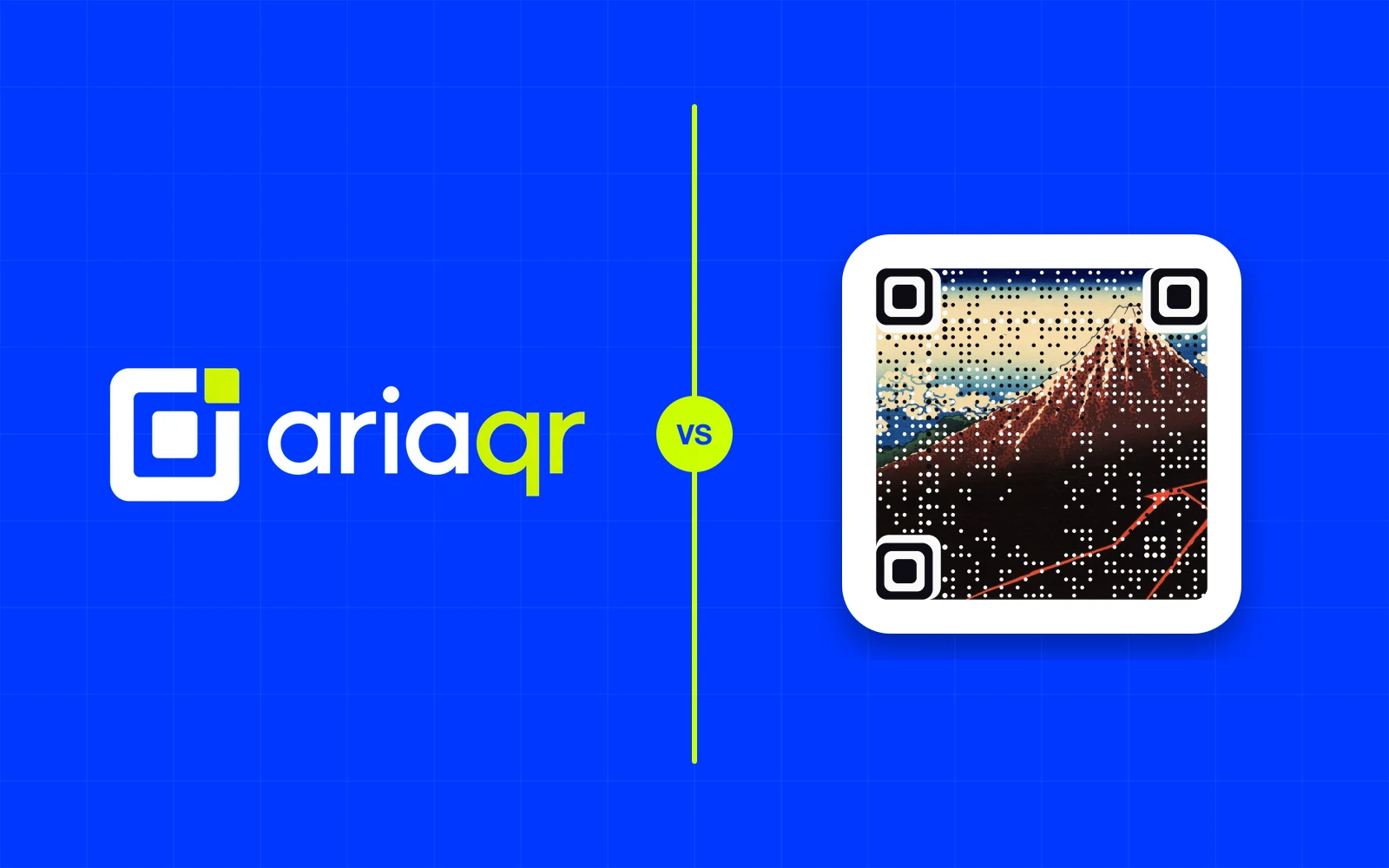
The code itself: the brand's artwork is the code. Packaging, posters, cards and screens carry the picture, not a barcode.
Editability and analytics: every dynamic code has an editable destination and a cookie-free dashboard with placements per campaign, CSV export, daily link-health checks and alerts.
Teams: shared workspaces on every plan. Invite by email, everyone sees every code, activations come from the workspace owner's plan. Create one per department or per agency.
Volume: bulk upload on the account page, fifty images at a time, each verified; a REST API with no per-call cap; an MCP server for AI agents. Enterprise terms set the activation volume.
Finance and paperwork: sequential invoices with tax handled for the jurisdiction, GST in India and export invoices elsewhere, purchase orders and consolidated invoicing on enterprise terms, a DPA and answered security questionnaires, a named contact with same-day replies.
Not in the product today: SSO, and a white-label dashboard. Both are on the enterprise roadmap; say so on the form if either decides it.
Side by side
| Broad platforms | AriaQR | |
|---|---|---|
| Verified before download | Not advertised | Yes, every code |
| What the code looks like | Styled grid, logo in the middle | The brand's image is the code |
| Editable destinations | Yes | Yes |
| Scan data | Varies; check their privacy terms | No cookies, no identifiers, aggregate only |
| Teams | Yes, higher tiers | Yes, every plan |
| Bulk and API | Yes, higher tiers | Bulk upload and API on the plan; MCP included |
| SSO | Generally on enterprise tiers | Roadmap |
| White-label | Some, check their sites | Roadmap; codes carry no branding today |
| Invoices, PO, DPA | Enterprise agreements | Enterprise terms |
| Pricing | Check their sites | Plan for teams; custom terms for volume (see pricing) |
How an enterprise engagement runs
Send the brief: artwork, quantities, surfaces, timeline, and the paperwork you need. You get a plan and a price the same day, and a call to scope volume. Setup: workspaces per department or agency, API keys if you need them, a first batch of verified codes to approve. Then production: bulk uploads or API calls, placements per campaign, destinations edited as campaigns move, invoices arriving by themselves.
The honest recommendation
If SSO or a white-label dashboard is a hard requirement this quarter, a broad platform ships it today. For everything else on the checklist, and for the two things enterprises actually get burned by, codes that fail in print and destinations that cannot change, AriaQR is built for the job and the terms are on the business page.